
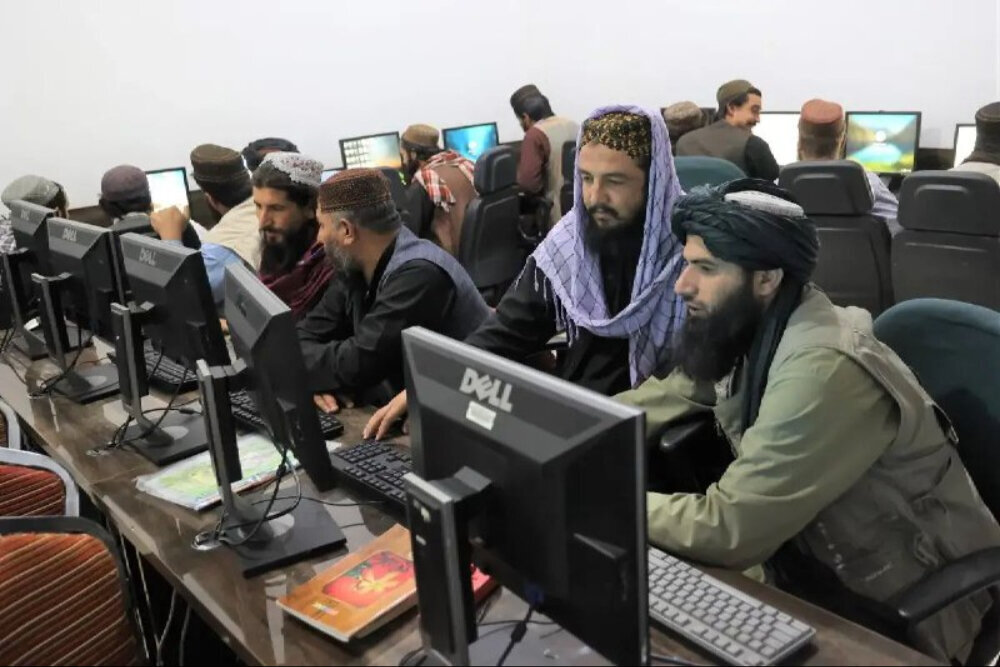
AhlulBayt News Agency: The move has caused widespread disruptions to banking, government services, online education, and business operations across the region, raising concerns that similar bans could soon be implemented in other provinces.
According to Taliban officials in Balkh, the order came directly from the Taliban’s supreme leadership.
Haji Zaid, spokesperson for the Taliban governor in Balkh, confirmed the ban and stated,
“To prevent immoral activities, the use of fiber optic internet will not be allowed. We are currently searching for alternative solutions.”
The fiber optic shutdown has resulted in the complete suspension of home and office internet connections, with residents of Mazar-i-Sharif, the provincial capital, now relying solely on mobile network signals for internet access—offering limited bandwidth and unstable connectivity.
Local sources have reported that government offices, including the passport office and customs department, are facing serious technical difficulties due to the lack of internet, with digital public services grinding to a halt.
Fiber optic internet in Balkh had provided high-speed connectivity through five neighboring countries, playing a critical role in regional communications and infrastructure.
Reports also indicate that six Taliban cabinet ministers are expected to travel to Kandahar to evaluate the broader consequences of the internet blackout and review policies related to Afghan Telecom, the country’s main internet provider.
The Taliban’s justification for the ban—rooted in a strict interpretation of Islamic law and moral codes—has drawn significant backlash from civil society and international observers, who view the move as a further restriction on freedom, access to information, and development in the already-isolated country.
The situation remains fluid, and digital access in other provinces may also be under threat, according to sources close to the matter.
This latest development highlights the growing digital repression under Taliban rule and poses serious questions about the future of Afghanistan’s technological and economic connectivity with the rest of the world.



Your Comment